
Summary of sandpit event which took place in June 2026
The inaugural Quantum × Society Research Sandpit took place on 5 June 2026 at the University of Glasgow, co-organised by the Social Studies of Deep Tech (SSoDT) research network, the Quantum ARC, and the University of Glasgow Political Economy Futures Forum.
The aim of this sandpit event was to explore and seed emerging research at the intersection of quantum technologies, social science and humanities. Participants were academics who spanned a range of diverse disciplines from universities across Scotland and beyond, including Glasgow, Strathclyde, Heriot Watt, and Warwick.
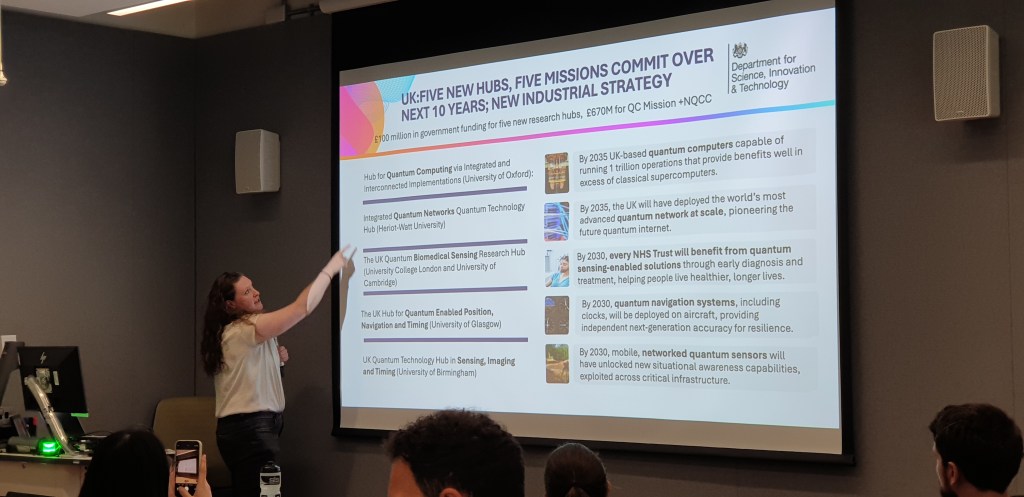
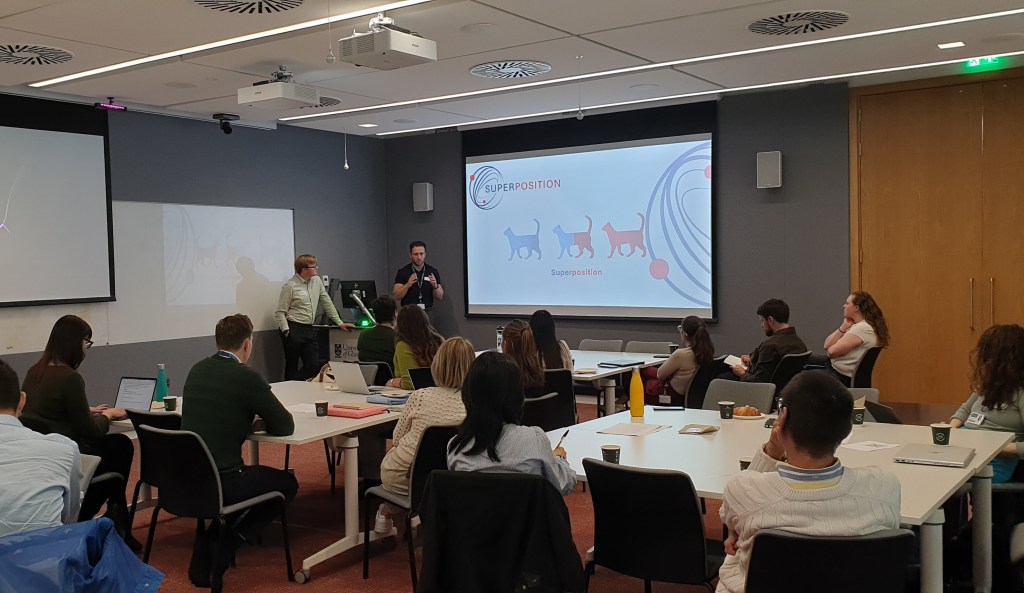
The day opened with scene-setting sessions on ‘what is quantum technology’, the ‘state of play’ in the government priorities research funding landscape regarding quantum, and the emerging themes already existing in quantum x society research.

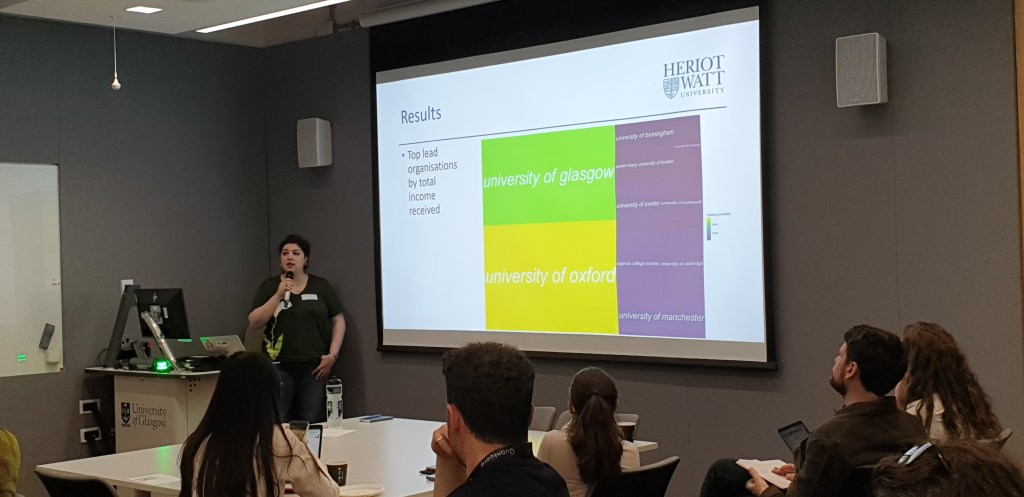
There were then discussion sessions, in which participants selected specific themes to focus conversation around, with ‘info snack’ sessions in between where researchers currently undertaking quantum x society work briefly shared their live projects (see summaries of discussion sessions below).
The event concluded with a clear idea of next steps that might emerge from the sandpit, especially given the availability of the Quantum ARC seed funding (open until 30 October 2026).
Among participants, there a consensus that quantum requires genuine integration of physics, social sciences, policy, and industry. It was acknowledged that there is plenty room (and need!) for social science and humanities researchers in the emerging development of quantum technologies.
Thank you to everyone who joined this event and we look forward to what comes next! Below is a summary of the discussions which took place.
Hype, Imaginaries, and the Rhetorical Politics of Quantum
A recurring thread across sessions was the problem of hype: the gap between what quantum technologies are currently capable of and the claims made about them in policy, investment, and public discourse. Quantum is often reduced to “quantum computing” in popular understanding, obscuring the broader range of quantum technologies and leading to confusion about timelines and realistic impact.
The comparison with AI hype cycles came up repeatedly, as did concern that “progress narratives” can conceal genuine complexity and uncertainty. The notion of “quantum washing” was discussed: the use of quantum terminology as a kind of legitimacy or investment signal, including by companies or movements with only a superficial relationship to quantum science. There was a question about whether the current moment represents a “quantum bubble,” though it was noted that the resource-intensive nature of the field may act as a brake on the more speculative dynamics seen in AI. Questions about who controls these narratives were central: who defines what counts as quantum, who benefits from hype, and who is harmed by it. Legitimacy and credibility were recurring concerns, particularly around who investors or policymakers should turn to for expertise when even domain researchers are reluctant to position themselves as “experts.” This creates barriers to both investment and public accountability. Quantum was also framed as a geopolitical asset, positioned by states in terms of national sovereignty and strategic competition. Comparisons to semiconductor-style industrial policy debates were made, raising questions about the appropriate balance between market-led innovation and government intervention. Post-quantum cryptography emerged as a specific area of concern, particularly the “download now, decrypt later” threat and the slow pace of transition to quantum-safe systems.
Supply Chains, Infrastructure, and Geopolitics of Quantum
Substantial discussion focused on the material and logistical foundations of quantum: the supply chains, infrastructure, and resource dependencies that underpin the technology but are often underappreciated in policy and public discourse. Quantum was noted to rely on highly specialised, interconnected supply chains with significant fragility. Critical dependencies include helium-3 (geopolitically sensitive), rare and purified materials, cryogenic infrastructure, and clean-room fabrication environments – all with high barriers to entry in terms of cost, expertise, and concentration of capability.
The UK’s limited domestic reserves and reliance on imports were flagged as a particular constraint and area in need of further inquiry. A major gap identified was the absence of comprehensive supply chain mapping. “Digital twins” of supply chains and enhanced information-sharing mechanisms were proposed, though commercial sensitivity was seen as a significant barrier to data sharing. The discussion also noted that information flows are as critical as material flows, with limited visibility across the system creating systemic risks that are difficult to address without some degree of trust and coordination between actors. Governance questions centred on the tension between local and global supply chains, resilience versus efficiency, and the appropriate level of state intervention.
Workforce, Skills, and the Labour Dimensions of Quantum
This session examined the workforce challenges specific to quantum. Concerns were raised about early career researchers (ECRs) facing job insecurity and funding gaps, and about how to support a smooth transition into the workforce given the highly specialised and somewhat closed nature of the field. The intense physical demands of working environments (such as clean rooms) were also noted as a less-discussed dimension of quantum labour. Discussion turned to pipeline development: how early and through what channels to recruit people into quantum careers, and how to make quantum legible and attractive to students who may not see clear career pathways. The importance of engaging schools, councils, and government bodies (including the Department for Education and Skills Development Scotland) was raised, though it was noted that current incentive structures prioritise securing grants over building networks. On upskilling, there was recognition that technical training dominates, leaving quantum researchers underprepared for entrepreneurship, industry transition, or leadership roles. Basic entrepreneurial and commercialisation skills training was identified as valuable, and the question was raised about whether training needs to start with supervisors to generate genuine contextual buy-in.
Who Speaks for Quantum?
This session focused specifically on the question of representation and voice in quantum discourse. The core tension was between technical credibility and communicative capacity: people with deep quantum expertise may lack effective communication skills with policymakers and publics, while skilled communicators may lack the technical credibility to be taken seriously by the scientific community. This raised questions about who legitimately speaks for quantum, e.g. scientists, social scientists, outreach staff, policymakers, anchor institutions, or “broker” roles that can translate across these different communities. There was broad agreement that such brokering roles are needed but that they are currently underdeveloped and under-resourced. Public engagement, opinion polling, and social science research were identified as mechanisms for better understanding public perceptions, expectations, and concerns, moving beyond a model of one-way communication toward something more dialogic. There was also attention to the structural dimensions of access: who is included in or excluded from quantum conversations, and whether the current ecosystem risks reproducing existing inequalities. Open questions the session identified as key for future inquiry: who currently speaks for quantum and with what authority; how credible communicators can be developed; and what the appropriate role of social scientists is in responsible quantum innovation.
From Conversation to Collaboration in Quantum x Society Research
The final session turned to next steps. There was also disccusion and consensus that quantum requires genuine integration of physics, social sciences, policy, and industry, but that disciplinary silos, different languages, and misaligned incentives remain significant barriers. Concrete ideas discussed included: communication plans around public understanding of quantum; “quantum washing” analysis, examining where the term is being used without substantive grounding; leadership and commercialisation skills development; early education interventions; and regulatory mapping through consultation with experts and government. The broader aspiration was to move from fragmented, informal conversations toward coordinated, interdisciplinary collaboration ecosystems, with proper resourcing, shared frameworks, and mechanisms for secure knowledge exchange across actors who may otherwise be in competition.

