
Dr Jack Radford PDRA, Extreme Light Group, University of Glasgow
I’m a researcher using single photon avalanche diodes for imaging through diffusive materials and I aim to translate my research to monitor brain health biomarkers. However, until now I had very little knowledge of the actual needs of the NHS. It turns out I’m not alone. The NHS are tired of researchers developing technology without first talking to healthcare professionals and listening to their needs.
This year I am taking part in multiple Quantum and Brain Health Alliance grants which include connecting the rapidly innovating quantum tech world in Scottish universities with clinicians and innovation teams that are ready to embrace new technology that will ultimately improve the quality of life for everyone.
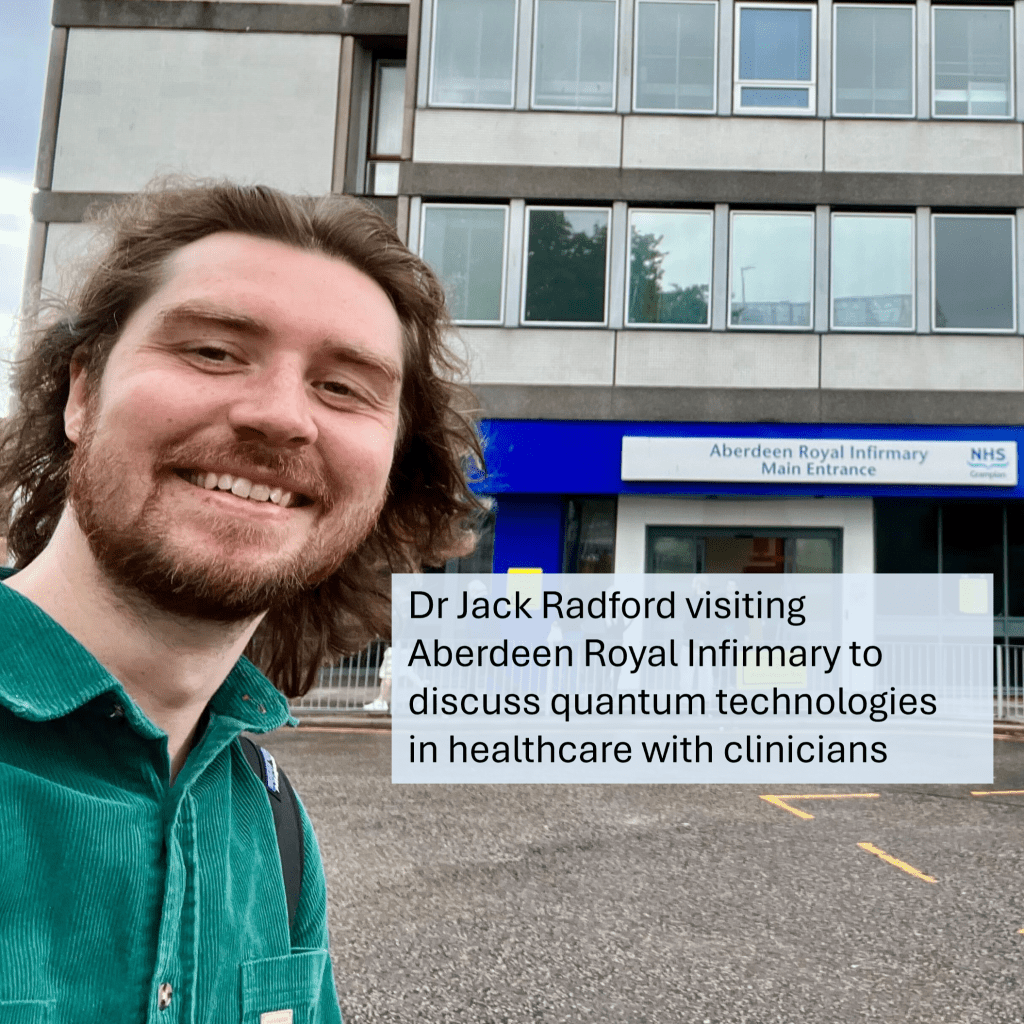
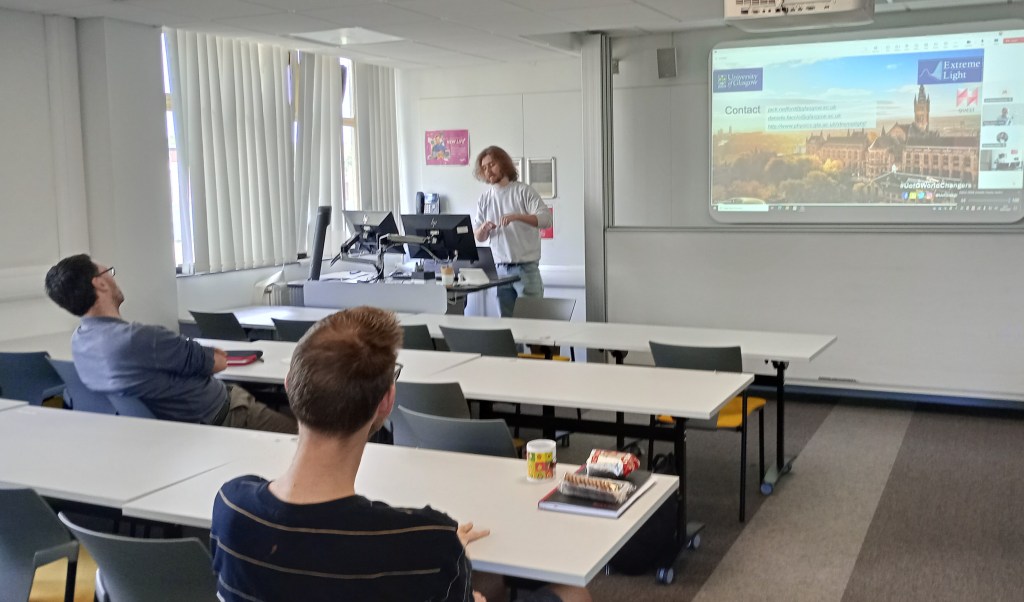
Over the summer, I introduced quantum concepts and how they can be harnessed in future technologies in an online webinar to healthcare workers in the NHS. I also gave an in-person lecture to researchers interested in the future of medtech at the University of Dundee. I have visited Raigmore Hospital and Aberdeen Royal Infirmary to discuss the opportunities of quantum medtech with over 20 clinicians, clinical scientists, and senior hospital managers who are engaged and excited about how technology can be used to tackle their unmet needs to improve quality of life for the patients and the public. I also continued the conversations at the MedTech North innovation conference, which highlighted the thriving MedTech industry sector in Scotland and the pathways to translate research into innovative products.
Some emerging themes from the visits were the use of quantum technologies for continuous health monitoring in the home, early detection of lung cancer, continuous monitoring the brain during anaesthesia, improving signal quality in low-field MRI, next-generation sensors for Cone-CT scanners, and quantifying non-relapse progressive multiple sclerosis – among many other topics! We also talked about how quantum technologies could fit with the NHS 10-year plans for system-wide change that puts care in the community and empowers patients to make better informed decisions about their healthcare journey. It is essential to consider where technology fits into the clinical pathway to ensure it benefits the NHS on an institutional level and does not incur additional costs downstream, inadvertently produce health inequalities, or introduce another task to a nurse’s already busy to-do list.
I also had the fantastic opportunity to travel to Boston with my industry collaboration partner Dr. Scott Black (CEO, Seluna). We engaged with clinicians, academics, and hospital directors from world-leading institutes such as Boston Children’s Hospital, Beth Israel Hospital, MIT, and Harvard to gain insight about how they integrate cutting edge technology into the healthcare system with commercial and academic pathways.

This is just the beginning! I am currently engaged in follow-up discussions about research collaborations and continuing to introduce relevant researchers to healthcare workers. It is now turn for the NHS teams to visit us in the labs of the quantum world. A 2-day visit will take place at the University of Glasgow to showcase the future of quantum medtech and connect the healthcare teams with researchers for lab tours and discussions. There will also be quantum networking webinars over teams to disseminate the information and forge connections, so if you are interested, look out for adverts, get in touch, and take part!
Thank you to Frances Hines and the team at NHS Highland Innovation Hub, SINAPSE for arranging the Scottish exchange visits, and Scott Black for his support in facilitating our U.S. visit. Finally, a huge thanks to the Alliances for supporting the vision to bridge the quantum tech and healthcare worlds and seed collaborations to develop impactful technologies that are driven by unmet needs!
 Quantum-alliance@glasgow.ac.uk